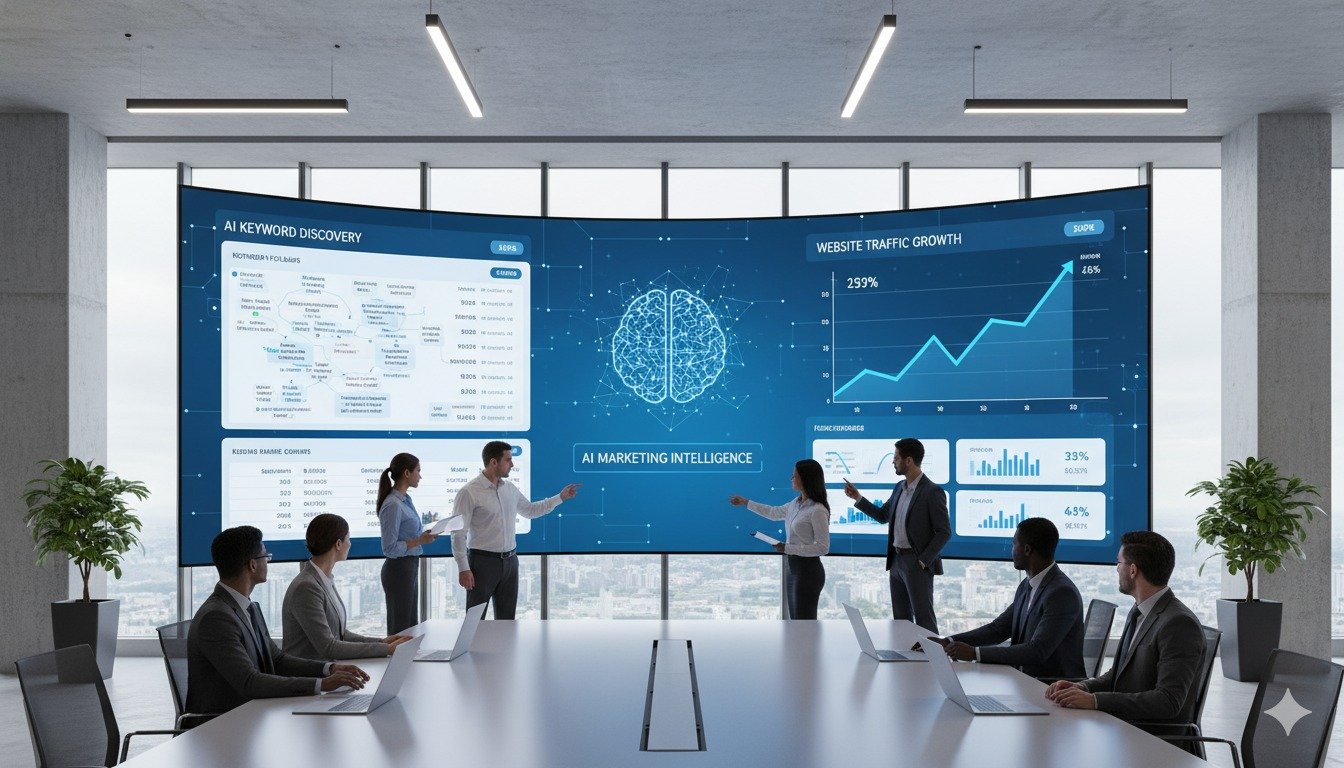


Artificial Intelligence (AI) is not a matter of the future. It is now one of the dominant players in the American business world. Companies in New York and Silicon Valley, big and small, are using AI. They want to boost efficiency, cut costs, and gain a competitive edge.
Business AI has transformed the world of finance, healthcare, retail, manufacturing, and logistics. As digital transformation speeds up, business leaders are thinking operations, workforce plans, long-term investments.
This article looks at how artificial intelligence will change the U.S. economy, jobs, and business strategies by 2026.
The emergence of AI in business operations
Automation can be viewed as one of the most significant influences of artificial intelligence. Companies in the United States are using AI systems to handle repetitive and time-consuming tasks.
AI in business is now used for:
- Customer service chatbots
- The forecasting and data analysis.
- Fraud detection in banking
- Supply chain optimization
- Individualized marketing efforts.
Automation enables businesses to work at a higher rate and with efficiency. To illustrate, artificial intelligence tools will be able to process substantial data sets in a few seconds. This aids the managers to make sound decisions using real-time information.
The AI software is also being used by many small businesses to operate the accounting, customer service, and inventory systems. This lowers the costs of operation and enhances productivity.
The Artificial Intelligence and the Adaptive Workplace
The issue of AI on employment continues to be among the most popular queries in the United States. Job automation and transformation of the workforce is of concern to many workers. Things are not that simple, though, as easy job replacement.
Artificial intelligence is transforming the type of work and not making it completely obsolete. Artificial intelligence does not eliminate workers in most industries.
For example:
- In the medical field, AI helps physicians in diagnosing.
- In investment, AI assists analysts to identify trends in the market data.
- In retail, AI forecasts the purchase of customers.
The demand for employees who know data science, cybersecurity, and machine learning is growing. Companies are now spending a lot of money in employee training and reskilling programs.
In 2026, the future of work is characterized by the cooperation of people and intelligent systems.
Digital changing and Competitive Advantage
Digital transformation is a popular term that means a big shift in business strategy. AI-driven solutions make companies become more agile and competitive.
AI helps enhance digital transformation by enhancing:
- Business intelligence
- Customer experience
- Operational efficiency
- Risk management
- Product innovation
In the fiscal industry of New York, companies are applying AI algorithms to forecast the market and risk exposure. AI-based predictive maintenance systems reduce equipment downtime and failures in manufacturing.
Such enhancements enable companies to remain competitive within the fast changing economic landscape.
AI in Key U.S. Industries
Finance and Fintech
Artificial intelligence has been adopted at a rapid rate in the U.S. financial industry. Fintech companies and banks apply AI to detect fraud, credit rating, and robotic investments.
Trading platforms in AI manipulate large data sets in order to forecast market trends. This enhances accuracy and minimisation of human error.
Healthcare Innovation
AI is used to enhance patient outcomes in healthcare organizations. Medical records and imaging data are analyzed using machine learning systems to assist in faster diagnosis.
AI is also used to assist hospitals with the workflow, shortening waiting time, and staffing optimization.
Retail and E-Commerce
The retailers turn to AI to customize the shopping experience. Recommendation engines will recommend products depending on how they are browsed. The supply chain logistics are also controlled by AI to eliminate stock-outs.
U.S. e-commerce is progressing and leading businesses to adopt AI-based tools of interacting with customers.
Supply Chain and manufacturing
Predictive analytics is an important part of contemporary manufacturing. AI systems are used to check the operation of equipment and to identify the initial signs of their breakdown. This decreases the downtime and reduces the cost of upkeep.
Another significant aspect in which AI is more efficient is supply chain optimization. Real time tracking of data enables the companies to modify shipping routes and inventories rapidly.
Information Technology and Analytics
One of the greatest assets in 2026 is data. Artificial intelligence converts unprocessed data into actionable data.
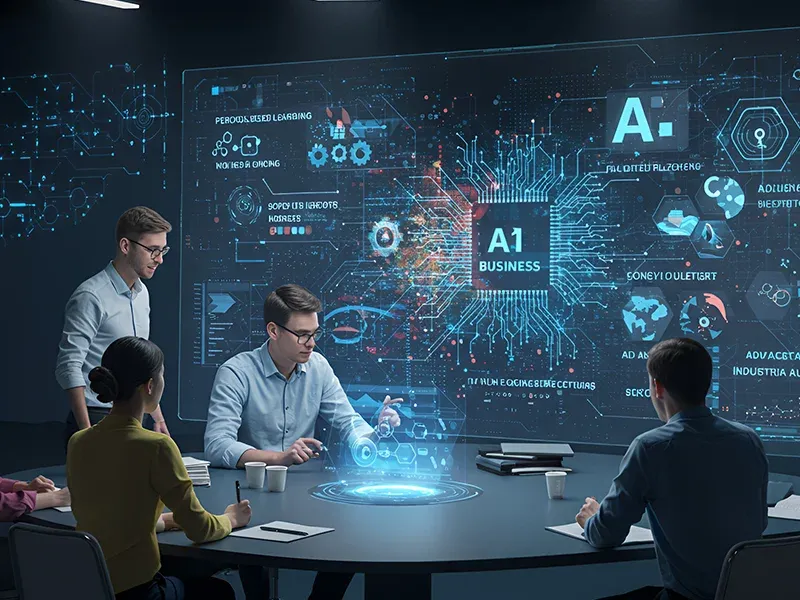
The application of AI-driven data analytics by companies has the following objectives:
- Forecast sales trends
- Determine the preferences of the consumers.
- Identify the inefficiency of operations.
- Surveillance of cybersecurity threats.
AI-driven business intelligence systems assist executives in making strategic choices. This eliminates confusion and helps in planning long term growth.
This is because the capability of processing big data in a short time provides companies with a robust market edge.
Ethical Artificial Intelligence and Regulatory
With the increase in the use of AI, there are also more issues regarding ethics and regulation. The policymakers of the United States are striving to establish a framework where AI development will be responsible.
Key concerns include:
- Data privacy protection
- Bias in AI algorithms
- Recentness in automated decisions.
- Cybersecurity risks
The changing regulations require businesses to be innovative in following the regulations. The aspect of compliance has become the part of AI strategy.
Companies that focus on ethical AI will build more trust with customers and investors in the long run.
Trends in Investment and Development of the Market
Investment by the venture capital in AI startups is still increasing in 2026. Artificial intelligence is viewed by investors as a growth driver in the long-term.
Major funding areas include:
- Generative AI tools
- Infrastructure Cloud computing.
- Cybersecurity solutions
- Artificial intelligence healthcare applications.
New York has continued to be a major location of fintech and AI advancement. Both startups and established companies are racing to come up with smarter, faster and more scalable solutions.
The United States market of AI is likely to grow as more businesses are interested in efficiency and saving of costs.
Problems of AI Adoption
In spite of high growth, the use of AI is challenging. Implementation costs may be high among small businesses. There is also the lack of qualified specialists in machine learning and data science.
The greater a company depends on the digital system, the greater the cybersecurity risks are. Artificial intelligence-powered applications have to be secured against information leaks and system crashes.
The issue of innovation and responsible risk management has to be balanced within organizations.
The Future Prospect of AI in the US Economy
Artificial intelligence is changing the American business scene in ways beyond just technology. It is shaping the corporate culture, labour force development and the long term economic planning.

By 2026, many industries can not do without AI. It is one of the essential elements of business strategy. The ability to adapt to the digital change brought by AI offers more chances to sustainable growth of companies.
It is likely that more AI will be entrenched in operations in the future. Due to the changes in regulations and the advance of technology, companies need to be informed and flexible.
Conclusion
The way American businesses are conducted is changing due to the use of Artificial Intelligence. AI touches nearly every part of the economy. This includes automation, data analytics, digital transformation, and cybersecurity.
Although there are still difficulties, AI benefits in business are evident. The modern corporate world features better performance, smarter decisions, and enhanced customer experiences.
Artificial intelligence will continue to be a strong force shaping the future of the U.S. economy as it evolves.