


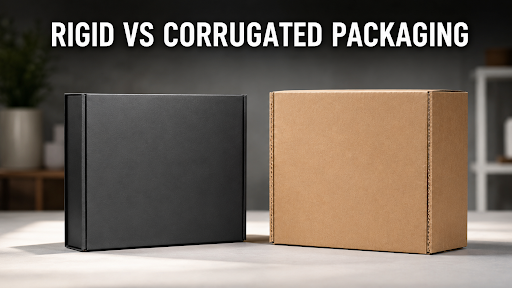
Most teams pick a product design first and figure out the box later. That’s backwards. The packaging you choose changes your shipping costs, your damage rates, and honestly, how good the product feels the second someone opens it.
When people ask about rigid vs corrugated packaging, they’re usually trying to solve one of two problems: protecting a product in transit, or making it look good on arrival. Rigid and corrugated solve different halves of that problem. Below is the breakdown you actually need before placing an order.
What Is Rigid Packaging?
The Material Behind the Strength
Rigid packaging is built from thick paperboard, roughly four to five times denser than standard corrugated stock. It won’t fold flat, and it keeps its shape even when you press down on it. Think of the box your last phone or watch came in. That solid, almost heavy feel? That’s a rigid board doing exactly what it’s supposed to do.
Why Brands Choose It
Manufacturers wrap that rigid core in decorative paper, foil, or fabric, so brands get full control over texture, color, and finish. That’s why luxury goods and cosmetics companies build so much of their identity around it. The box stops being a container and starts being part of the product itself.
What Is Corrugated Packaging?
How It’s Built
Corrugated packaging uses fluted paper sandwiched between two flat liners. Those flutes trap pockets of air, and that’s where the cushioning comes from. The result is light, foldable, and cheap to produce fast.
Read more: Why PTFE FELIS is the Preferred Choice for Industrial Sealing Solutions
Where You’ll See It Most
You already know corrugated boxes even if you’ve never thought about the name for them. Shipping cartons, retail shelf displays, the box your last online order arrived in. It’s the default for anything that has to survive a truck, a conveyor belt, or a warehouse floor before it reaches a customer.
Rigid vs Corrugated Packaging: Quick Comparison
Factor Rigid Packaging Corrugated Packaging Structural strength High, resists crushing Moderate, flexes under pressure Shock absorption Low High, flutes cushion impact Production cost Higher, more manual labor Lower, machine-driven at scale Best for Retail presentation, unboxing Shipping, bulk transport Moisture resistance Low unless treated Can be coated for resistance Typical industries Electronics, cosmetics, luxury goods Food, logistics, e-commerce shipping
Rigid vs Corrugated Packaging: Strength and Durability
Rigid wins if the threat is pressure. It holds its shape under weight better than almost anything else on the shelf, so if your box can’t afford to dent or warp, rigid is the safer bet.
Corrugated wins if the threat is impact. Those fluted layers work like a mattress catching a fall, soaking up shocks instead of resisting them. Anything that gets dropped, stacked, or hauled over rough roads does better wrapped in corrugated.
So don’t ask which material is stronger. Ask what kind of damage your product is actually likely to face.
Cost Per Unit at Scale
Rigid costs more, plain and simple. Thicker board, an extra wrapping step, and often hands-on assembly all push the price up. For small batches or premium lines, customers usually expect that cost anyway and don’t blink at it.
Corrugated wins on volume, no contest. Machines cut, fold, and glue it by the thousands with barely any labor involved. If you’re shipping in bulk and every cent of margin counts, corrugated keeps that line item manageable.
Here’s a rule that holds up in most cases: use rigid when the box is part of the experience, and use corrugated when the box just needs to protect what’s inside.
Best Fit by Industry
Electronics
Phones, cameras, smartwatches, all of it leans on rigid packaging. Customers expect a premium unboxing moment, and corrugated can’t really fake that.
Cosmetics
Skincare and makeup brands lean on rigid boxes just as hard. The weight and finish tell the customer this is quality before they’ve even opened the lid.
Food-Grade Products
Corrugated takes over here, especially for bulk food shipping. It breathes, it’s cheap, and it takes food-safe coatings without much fuss.
Shipping and Logistics
Anything moving through a warehouse or delivery network belongs in corrugated. It’s built to stack, get handled roughly, and survive long hauls, not to look pretty on a shelf.
Durability and Moisture Resistance
Corrugated board can be coated with wax or plastic to resist moisture, which makes it a solid pick for perishables or anywhere humidity is a problem.
Rigid packaging struggles more with moisture on its own, but it holds up fine in dry, controlled retail spaces. If your product lives on a shelf rather than a loading dock, this gap matters a lot less than it sounds.
When to Switch as Your Brand Scales
Signs It’s Time to Reconsider
Plenty of brands start with rigid packaging because it looks sharp and helps build identity early. But as orders grow, the math changes fast. Watch for these signs:
- Shipping costs are quietly eating your margins
- Order volume has outgrown what manual assembly can keep up with
- Customers care more about protection than presentation
- You’re shipping into markets with rougher handling conditions
The Hybrid Approach
You don’t have to pick one and stick with it forever. A lot of brands run both: rigid for flagship or gift products, corrugated for everything shipped in bulk. That way the brand experience stays intact where it matters most, without packaging costs spiraling as volume climbs.
Making the Final Call
There’s no single winner here, and anyone telling you otherwise is oversimplifying. The right pick depends on what your product needs to survive, what your customer expects to see, and what your budget can actually support right now.
Before you decide, ask three questions. How far is this product traveling? How much does the unboxing moment matter to your brand? And how many units are you making each month?
Answer those honestly and the choice usually makes itself.
Around 320 Indians are reportedly missing after deadly flash floods struck Nepal, with rescue teams
Final Thoughts
Rigid and corrugated packaging both earn their spot in industrial use, just for different reasons. Rigid brings strength and a premium feel. Corrugated brings flexibility and real savings once you scale. Match the material to your product, your shipping conditions, and your budget, and you’ll dodge the two mistakes everyone makes: paying for protection you didn’t need, or skimping on protection your product deserved.